
Pench
Mahua Vann
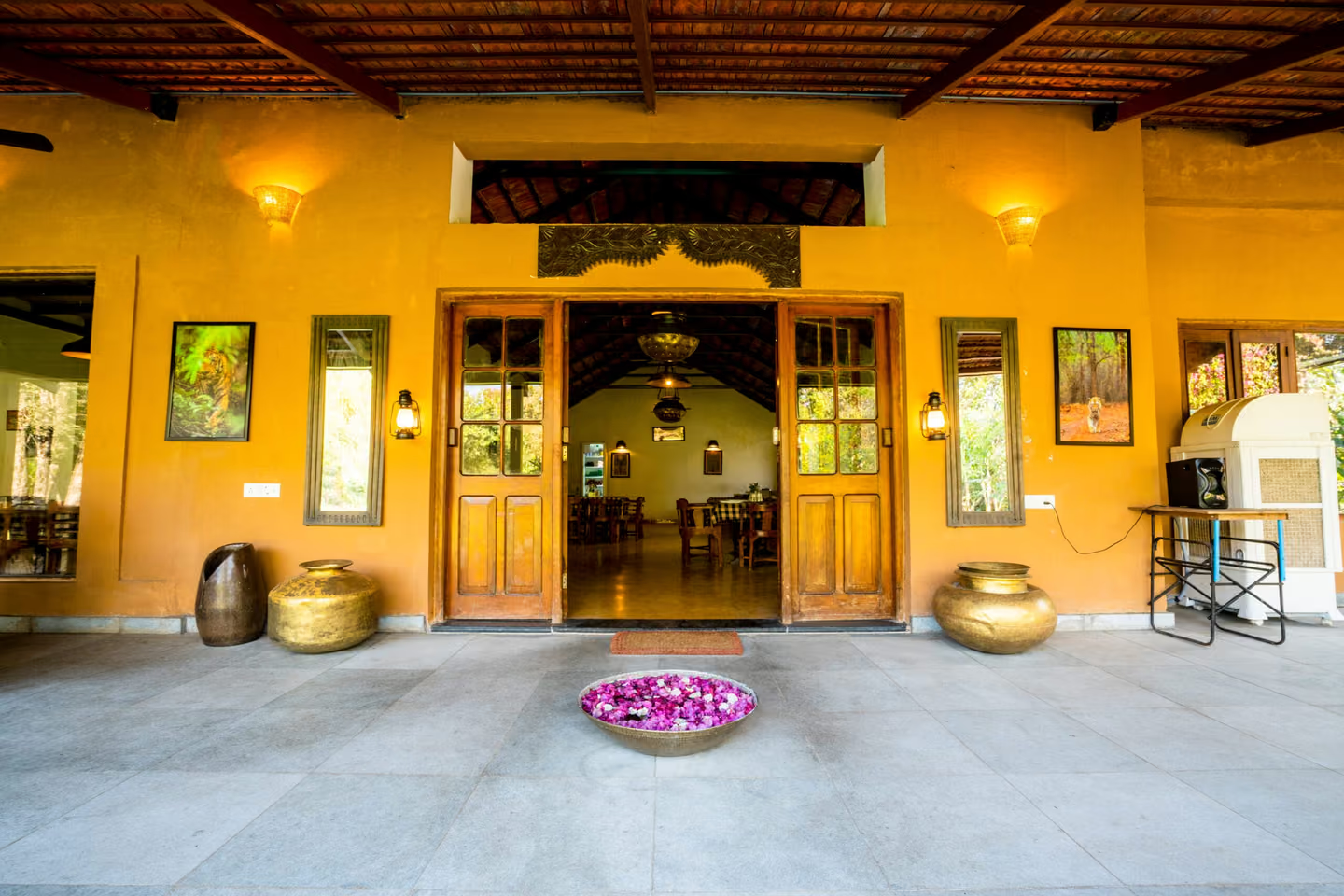
Mud-plastered cottages and raised machaans under sal and mahua, with bay windows sized for what is outside them. The lodge sits in its own private eco park, which the birds found long before we did.



Two family-run lodges at the gates of Pench and Tadoba.
01
The Lodges
Mahua is deliberately small — two forests known deeply rather than many known in passing. One at Pench, one at Tadoba, both close enough to the gate to be among the first vehicles through it at dawn.
Pench
Mud-plastered cottages and raised machaans under sal and mahua, with bay windows sized for what is outside them. The lodge sits in its own private eco park, which the birds found long before we did.

Tadoba
Set along the seasonal Hattinala river, where three new river-facing machaans look onto a stretch the dominant male, Xylo, still walks. Raw forest, and very little standing between you and it.

02
The Jungles
Bengal tiger and Indian leopard — and, rarely, the melanistic leopard that has made these hills briefly famous. Beyond them: gaur, sloth bear, dhole, and some three hundred recorded birds. Pench is the forest Kipling wrote into the Jungle Book without ever setting foot in it; Tadoba's tiger density is among the highest in the country.

03
Rooted Like The Mahua
Each spring, before first light, Madhuca longifolia drops its cream-coloured flowers until the forest floor lies carpeted in pale blossom — and the forest comes to feed. Chital, sloth bear and a hundred smaller lives gather beneath it. We took our name from that tree.
To the Gond and other Adivasi communities of these forests the mahua is kalpavriksha, the wish-fulfilling tree. It gave oil for lamps, leaves for plates, medicine and vessel, and it is never felled — local gods are placed high in its branches so that no one would dare.
So we build in the vernacular, hire from the villages around us, and cook what the season gives. At Pachdhar, a village adjoining Pench, more than a hundred Kumhar families have kept the potter's wheel turning. You can sit down at one.


04
Mahua Philosophy
Twenty-six rooms at Vann, fourteen at Tola — deluxe rooms, cottages, suites and a family suite, eight of the cottages with a deck over the seasonal river. All of them handmade in mud and local wood. Air conditioning, a tea and coffee maker, a private vanity area; and then the doors thrown open.


05
Experiences
The gates open before the light does. We are five kilometres from Turia and among the first vehicles through, which matters most in the hour when the forest is still saying out loud where everything is.

Fireside
Tables under the trees, a fire going, the forest listening in.

Stillness
Lawn yoga, pranayama and candlelit sound baths.

After dark
Telescopes on the lawn and wildlife documentaries under the trees.

On foot
Guided trails around the lodge — pugmarks, birdcalls, small dramas.

Local hands
Pottery at the wheel, learnt from the villages next door.

At the gate
Morning and evening drives in open vehicles, led by naturalists who have followed these particular tigresses and their lineages for years.

The park opens on the first of October and closes at the end of June. December and January fill first. April and May are when the cats are easiest to find. The green season, when the forest is still wet and the vehicles are few, is the one we would choose.
Write to us and we will tell you honestly which of the two is right for what you want.